The partnership addresses a timing problem in Indonesia’s 5G build-out: operators have committed to coverage targets on a five-year clock, and sites are going up faster than fiber can be built to reach them.
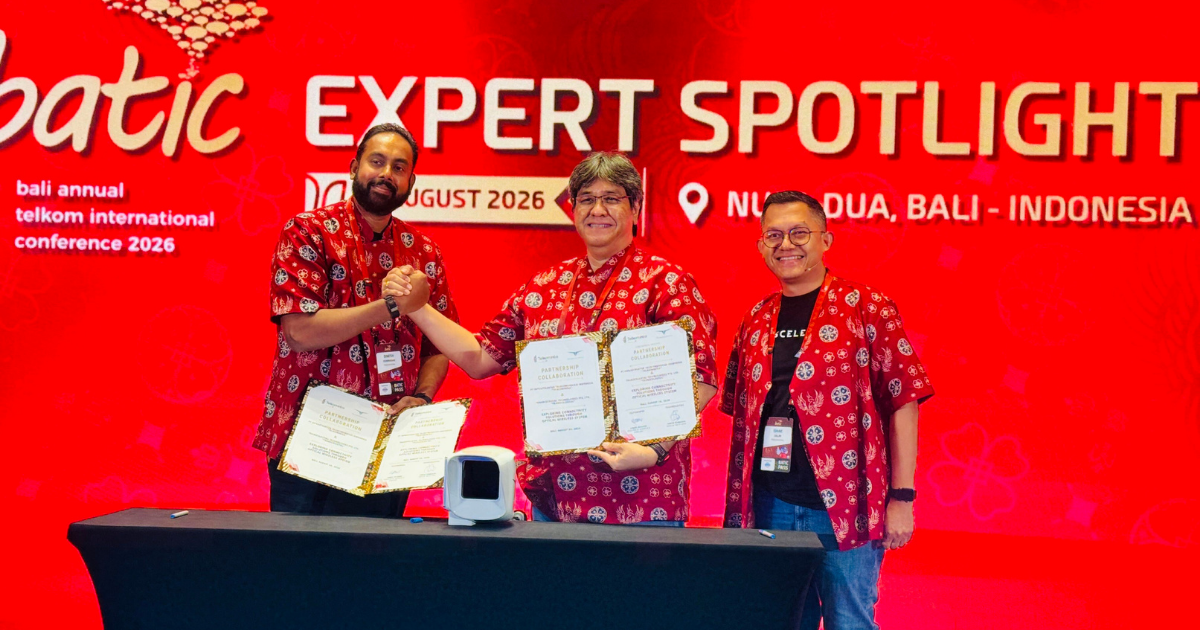
INDONESIA, 8 SEPTEMBER 2026: Telkominfra and Transcelestial today announced a partnership to deliver CENTAURI, Transcelestial’s optical wireless system, across Indonesia as a fully managed infrastructure service with Telkominfra implementing, operating and maintaining the links on behalf of customers.
“No single technology is going to close Indonesia’s coverage gap,” said Samuel Pasaribu, Director of Business & Strategy Telkominfra. “Fiber remains the backbone, but the backbone takes time to lay, and our customer deadlines don’t wait for permits. Adding laser links to our toolkit means we can serve a site in days rather than months, then backfill with fiber when the route is ready. Free Space Optics also provides a rapid connectivity option in emergency situations, supporting disaster mitigation and network restoration when conventional infrastructure is disrupted. It is a more adaptive approach to network deployment that better matches the pace at which our enterprise and telco customers operate”

Left to Right: Samuel Pasaribu, Director of Business & Strategy Telkominfra, Dinesh Kummaran, Head of Sales APAC Transcelestial, Ishak Halim Country Head Indonesia
Why now: 5G coverage is expanding faster than sites can be connected
Indonesia’s government recently auctioned new spectrum to mobile operators, to widen 5G coverage across the country. Operators now have five years to bring 5G to most of the population and service to hundreds of villages that today have little or none.
That means thousands of new sites, in a country with less than half the global average of towers per person. Each one needs a fiber-grade connection before it serves a single customer and that connection is where the timeline slips.
The issue is not capacity, a single fiber route carries far more than any cluster of sites will consume. It is the time required to put that route into the ground, where permitting, right-of-way negotiation, land access and trenching routinely add months to a site. The usual fallback is a radio link. But in dense urban areas the spectrum is already crowded, so each new link has to be planned around every other link nearby. That means weeks of coordination, recurring licence fees, and a link that still lands short of the capacity the site needed.
This is the gap Telkominfra and Transcelestial close: fiber-grade wireless capacity for sites where fiber is too slow, too costly, or physically impossible.
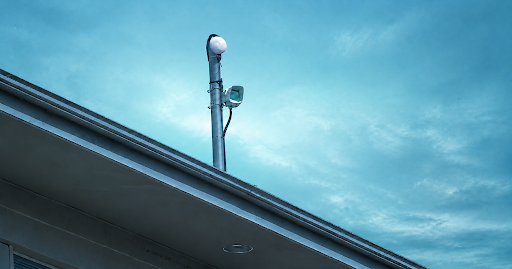
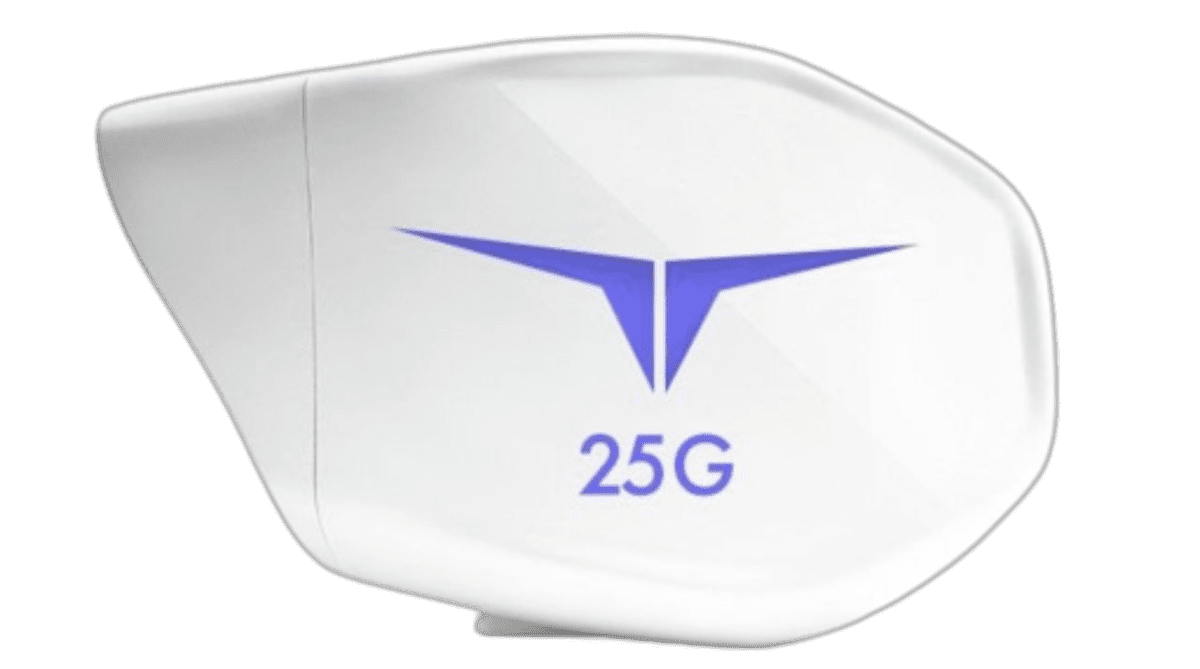
For Telkominfra, CENTAURI is delivered as part of an end-to-end connectivity solution for customers. A link that goes live in days, carries up to 10Gbps at sub-millisecond latency, and needs no trenching or spectrum licence.
Three applications the partnership will address first
The two companies will pursue a roadmap that treats optical wireless as a standing layer of the network rather than a workaround for a single constraint:
- Connecting new sites in dense areas. Where the rollout is densest, fiber takes longest and microwave is most congested. A laser link goes up between two points in line of sight and carries the capacity a 5G site needs from day one.
- Interim connectivity during build. New sites can go live on a laser link within days and cut over to permanent fiber once it lands, taking connectivity off the critical path of a build programme.
- Connecting data centres at fiber speed Enterprises, data centers, and network hubs often need a second, physically separate route to improve network resilience. Finding truly diverse fiber routes can be challenging, especially when existing fiber follows the same roads, ducts, or trenches. This can make fiber deployment both slow and expensive. A laser link provides a physically separate path by design, giving customers a fast and cost-effective option for network diversity and backup
“Every market we work in has the same gap between how quickly people need connectivity and how quickly it can be built,” said Ishak Halim, Country Head, Indonesia. “What’s different here is the operating layer. A laser link is only useful if someone can install it, monitor it, and maintain it. Telkominfra already has people on the ground across Indonesia, so they can provide that operational layer. That’s what turns a product into infrastructure.”
The two companies are now working through initial customer engagements and proof-of-concept deployments, with a roadmap covering mobile backhaul, enterprise and campus connectivity, remote access, smart city projects and disaster recovery.
——- END OF ANNOUNCEMENT——-
For press enquiries and requests, please contact: Simran Pant ([email protected])
For more, visit our website www.transcelestial.space OR follow us on X (@trans_celestial)
For sales enquiries, please contact: [email protected]
For more information, visit https://linktr.ee/transcelestial
About Transcelestial
Transcelestial has mass-produced a solution for superfast global Internet distribution that leverages its proprietary wireless laser communication technology to create a wireless distribution network between buildings, traditional cell towers, street-level poles and other physical infrastructure – with a much lower total operating cost for Mobile Network Operators, Internet Service Providers and enterprises.
Transcelestial aims to develop a constellation of LEO satellites allowing their laser network to not only connect inter-cities but upwards in space to connect continents globally.
Transcelestial has won numerous industry and global awards such as Fast Company’s Most Innovative, Most Frontier Company by Asiastar10x10, SPIFFY San Andreas Award for Most Disruptive Technology by Telecom Council, Forbes 30 Under 30 to their CTO Dr. Mohammad Danesh, Edge 35 Under 35 to their CEO Rohit Jha, The Most Ambitious Start-Up in Photonics Award by The Optical Society (OSA).
About Telkominfra
PT Infrastruktur Telekomunikasi Indonesia (Telkominfra), a subsidiary of PT Telkom Indonesia (Persero) Tbk, is a leading integrated telecommunications infrastructure provider in Indonesia, operating nationwide through 11 regional offices. Its portfolio covers Submarine Cable Services, Infra Network Services, and Power Solutions, supporting over 61.000 managed service sites, 59.000 sites under power solutions manage operation, and nearly 27.000 km of submarine cable across the country.
Telkominfra’s commitment to quality is reflected in its ISO 21502:2020 certification for Project Management System, covering its full service portfolio, as well as its recognition as a Top 5 OpCo for Culture Implementation within Telkom Group in 2026.
Through continuous innovation and strategic partnerships, Telkominfra is committed to becoming Indonesia’s trusted infrastructure partner, accelerating customers’ digital transformation and building a more connected future.