Transcelestial link is designed to move high-volume satellite imagery from orbit into LC60’s processing and delivery chain
SAN FRANCISCO / PERTH, 20 AUGUST 2026: LatConnect 60 (LC60) has signed a commercial contract with Transcelestial covering an optical communications terminal for its SWIRSAT-1 mission, together with access to Transcelestial’s optical ground station network for ongoing space-to-ground data transport and ground station operations.
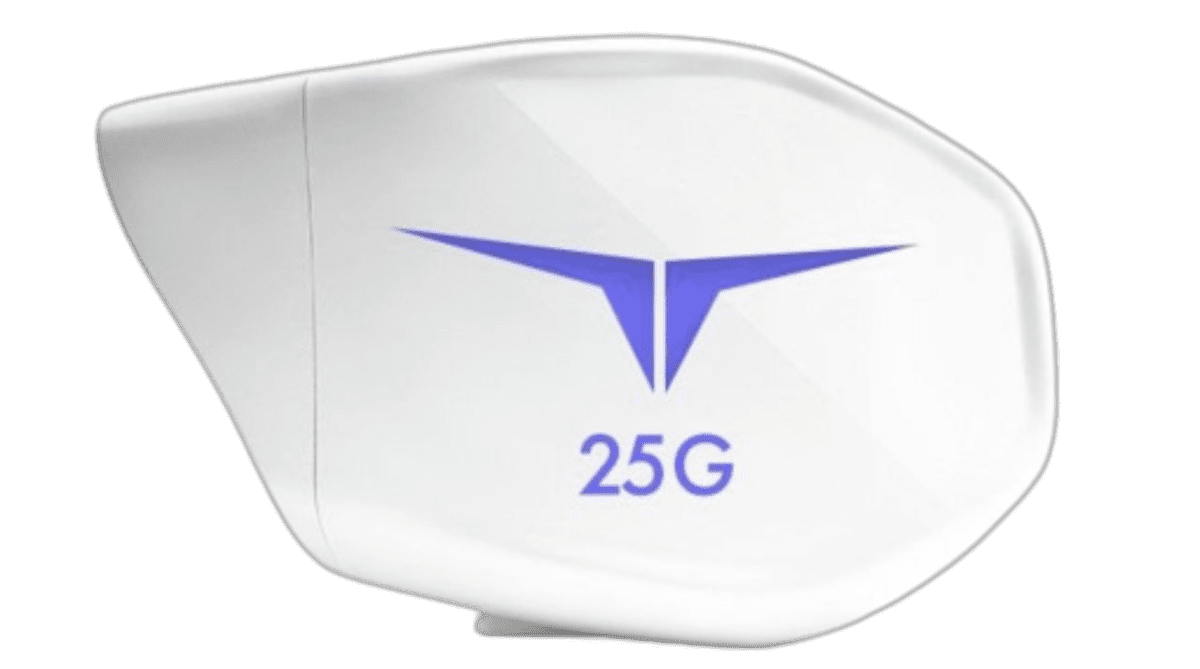
The signed commercial agreement covers an optical communications terminal designed for rates of up to 10Gbps, access to Transcelestial’s optical ground station network, with two stations operational today and five to six targeted by end 2026 and ongoing data transport and ground station operations. Together, these elements are intended to carry mission imagery from the spacecraft into LC60’s processing and customer-delivery environment after the initial mission and subsequent commissioning.
The commercial structure lets satellite operators procure the flight terminal and the ground connectivity to use it as a single service, rather than fund, build and licence an optical ground segment of their own.
“Earth-observation operators are collecting far more data than they can get to the ground. RF downlink is spectrum-constrained, licence-heavy and expensive per gigabyte, so operators end up discarding or deprioritising imagery they have already paid to collect. What LatConnect 60 is buying is the equivalent of dark fibre from their satellite to multiple nodes on the ground: a high-capacity optical path plus the ground network to terminate it, bought as a service, with no spectrum licensing and no optical ground segment for them to build,” said Dr. Mohammad Danesh, Co-Founder and CTO of Transcelestial.
“For an Earth-intelligence mission, the sensor and the data path cannot be treated as separate questions. The mission only creates value when we can move high-volume SWIR imagery from collection into the hands of users within operationally useful delivery windows. Transcelestial’s terminal will reduce the time needed to clear imagery from the AUKUS-aligned spacecraft and make more of the collected data available to LC60’s processing chain,” said Venkat Pillay, founder and CEO of LatConnect 60.
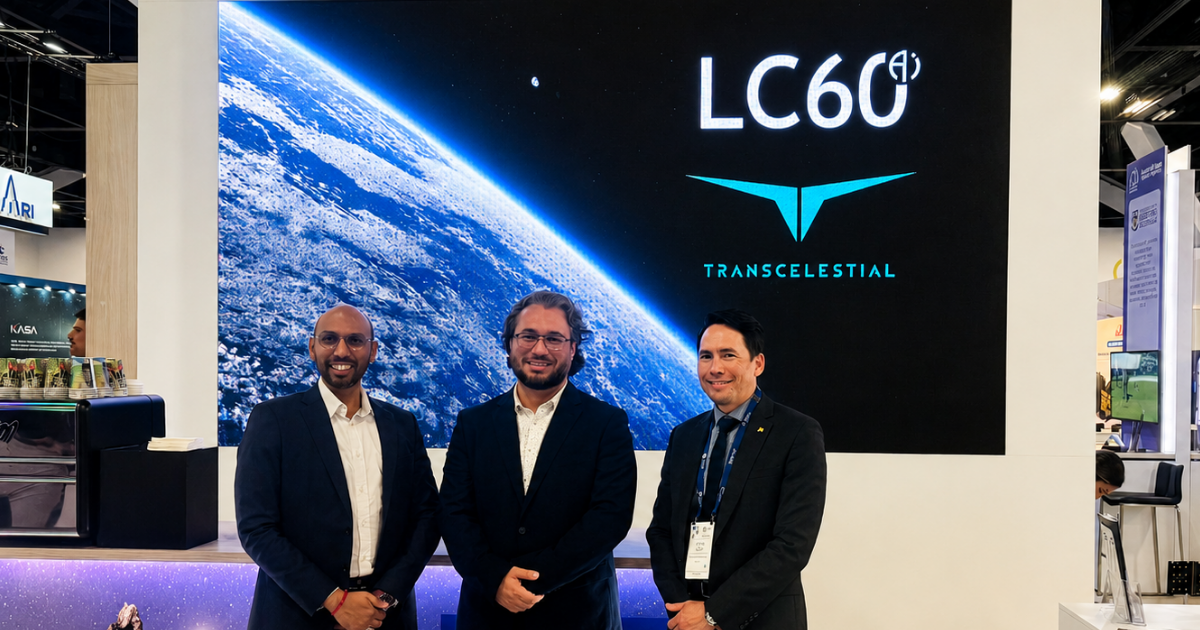
LatConnect 60 and Transcelestial leadership at the signing of an earlier memorandum of understanding in presence of Western Australia Government, IAC Sydney. Left to right: Venkat Pillay, CEO Latconnect60, Dr. Mohammad Danesh, CTO Transcelestial, Justin Western Australia Government
LC60 is building an AUKUS-aligned Earth-intelligence capability with a vertically integrated chain: sovereign tasking, satellite sensing, onboard processing, analytics and direct data delivery. Its published roadmap includes a first SWIRSAT launch in Q1 2027 and an 18-satellite constellation by 2029.
Transcelestial’s role will be to provide a high-capacity data-transport layer between the spacecraft and LC60’s controlled processing environment. In practical terms this is the equivalent of dark fibre from the satellite to multiple nodes on the ground: dedicated high-capacity connectivity between the spacecraft and LC60’s processing environment, without the spectrum licensing that RF downlink requires.
Operators like LC60 procure the flight terminal and the ground connectivity to use it as one service, instead of funding, building and licensing an optical ground segment themselves.
LC60 is expected to retain mission tasking, data ownership and customer-delivery control while Transcelestial operates the transport layer.

The problem: collecting more than you can send home
Earth observation operators routinely collect more data than they can downlink. A typical small-satellite X-band link runs at 100 Mbps, so a seven-minute pass moves roughly 5 GB. To fit that budget, operators compress imagery onboard, which costs spacecraft power and reduces the fidelity of data they have already paid to collect.
Optical changes the arithmetic. The same seven-minute pass moves roughly 50 GB on Transcelestial’s 1 Gbps optical service, and roughly 500 GB on the 10 Gbps configuration. Usage is priced per gigabyte, with no spectrum coordination or licensing to arrange.
Security starts at the physical layer
An optical downlink is harder to intercept than an RF broadcast because of how the signal travels. The beam is narrow and directional rather than radiated across a wide area, so an interceptor has to be physically inside the beam path. There is no wide-area RF footprint to collect against, and the link is not exposed to broadband RF jamming the way a spectrum-based downlink is.
Transcelestial’s terminal adds its production post-quantum cryptography, announced in March 2026, giving LC60 quantum-resistant protection at the application layer on top of that hardened optical path.
Availability through network diversity
A single ground station would make weather a single point of failure, and LC60’s roadmap runs to 18 satellites by 2029. Transcelestial handles availability across the network instead: if weather closes one station, the mission downlinks to another node or waits a short interval for the next available site. That is why the station count matters, and why the network is scaling from two today toward five to six by the end of 2026.
Within a pass, adaptive data rates and forward error correction let the link raise throughput continuously as the geometry improves, rather than dropping to a fixed fallback rate. As LC60 adds spacecraft, the same network absorbs them without the operator building ground infrastructure of its own.
Planning a 2027 mission?
Transcelestial is allocating terminal and network slots now. Request a mission-specific downlink assessment and we will model the achievable data volume per pass over your planned orbit, the ground stations your mission would use, and indicative per-gigabyte pricing.
——- END OF ANNOUNCEMENT——-
For press enquiries and requests, please contact: Simran Pant ([email protected])
For more, visit our website www.transcelestial.space OR follow us on X (@trans_celestial)
For sales enquiries, please contact: [email protected]
For more information, visit https://linktr.ee/transcelestial
About Transcelestial
Transcelestial builds laser communications hardware and operates the ground network to use it, spanning satellite-to-ground downlink, inter-satellite links and terrestrial point-to-point connectivity. The company manufactures more than 100 optical terminals a month at its own facility, has a terminal in orbit, and has four more missions planned over the next 12 months. It operates optical ground stations in Singapore and Spain, the first nodes of a global network. Long term, Transcelestial is building a constellation of LEO satellites to act as an undersea cable replacement in space, connecting cities on the ground and assets in orbit.
Transcelestial has won numerous industry and global awards such as Fast Company’s Most Innovative, Most Frontier Company by Asiastar10x10, SPIFFY San Andreas Award for Most Disruptive Technology by Telecom Council, Forbes 30 Under 30 to their CTO Dr. Mohammad Danesh, Edge 35 Under 35 to their CEO Rohit Jha, The Most Ambitious Start-Up in Photonics Award by The Optical Society (OSA).
About LatConnect 60
LatConnect 60 is a vertically integrated, post-revenue Australian AI and satellite Earth observation company, delivering intelligence across defence, agriculture, carbon,and resources sectors. LC60 owns its satellites and AI models and is launching its proprietary SWIRSAT short-wave infrared satellite constellation in Q1 2027. LC60 is headquartered in Perth, Australia, with subsidiary offices in Malaysia; India; UAE; and USA.