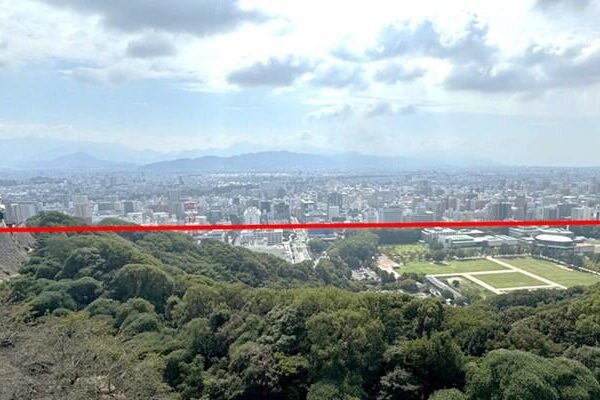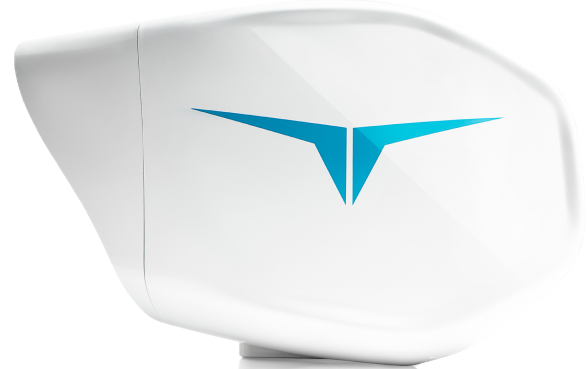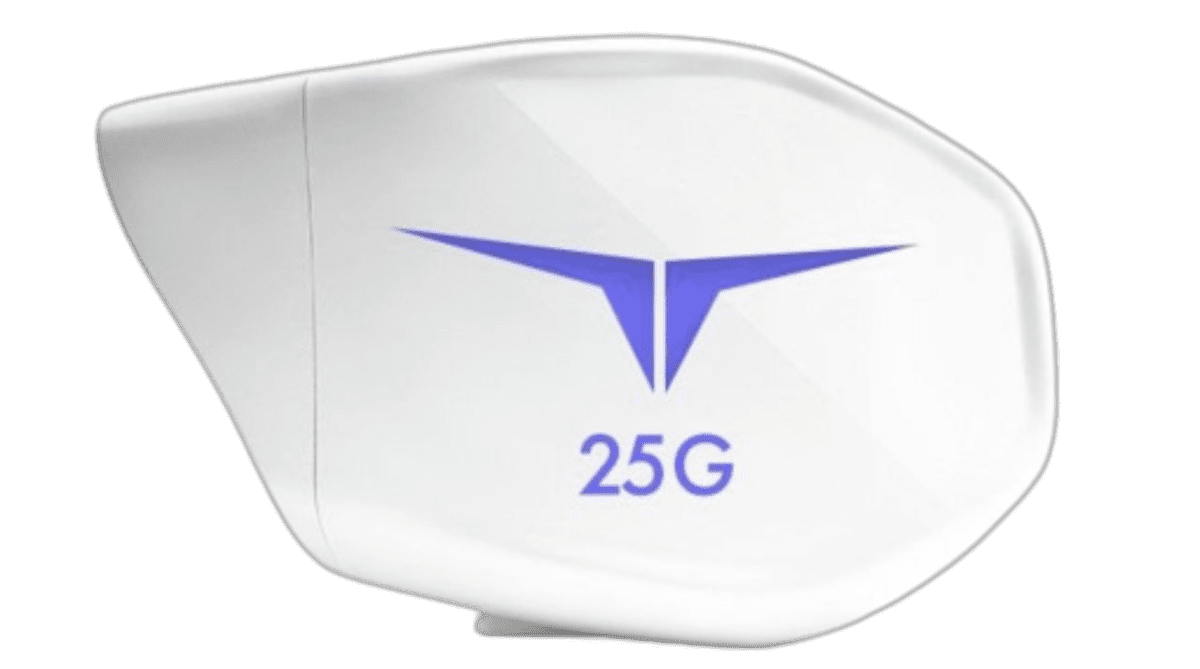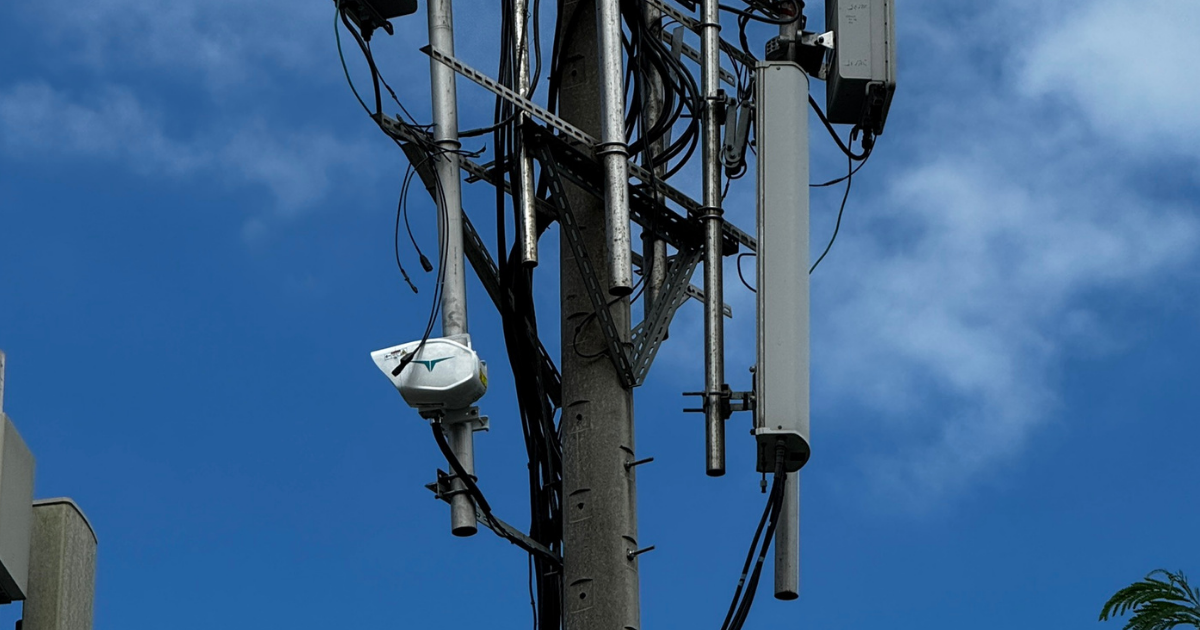
CENTAURI deployed on an existing monopole to connect across the Mataian River Bridge 1.25km away.
TAIWAN, 18 MAR 2026: Taiwan Mobile and Transcelestial restored services after Typhoon Ragasa severed connectivity by pioneering the use of lasers for disaster recovery to bring critical communications back online.
“For a national telecom operators, disasters shift priorities. First responders, governments and families must have a way to stay in contact. The immediate concern is no longer peak performance, but critical service continuity and network resilience amid physical risks from extreme weather. We needed a restoration solution that could be deployed immediately, operate at high standards, and withstand harsh weather conditions in line with our disaster recovery standards. Transcelestial’s laser communications allowed us to do that and we look forward to exploring opportunities to bring the benefits of this technology into further use cases within our mobile network and enterprise connectivity,” said C.H. Jih, Chief Technology Officer at Taiwan Mobile, Taiwan’s leading mobile network operator.
Typhoon Ragasa brought torrential rain that caused the Mataian River Bridge in Hualien County to collapse, cutting off a communications route running beneath the structure. Full repairs were expected to take close to six months due to the scale of damage and reconstruction required.
Instead, Taiwan Mobile worked with Transcelestial and local systems integrator dBTech to restore services using a 1.25-kilometre laser link, bypassing the damaged infrastructure entirely.
Unlike traditional communications lines that must be buried underground or attached to bridges and towers, laser communications transmit data as beams of light through the air between two points. This allows connections to be set up quickly across rivers, valleys, or damaged terrain without digging, construction work, or long permitting processes. In disaster scenarios, this means connectivity can be restored in hours or days rather than months.

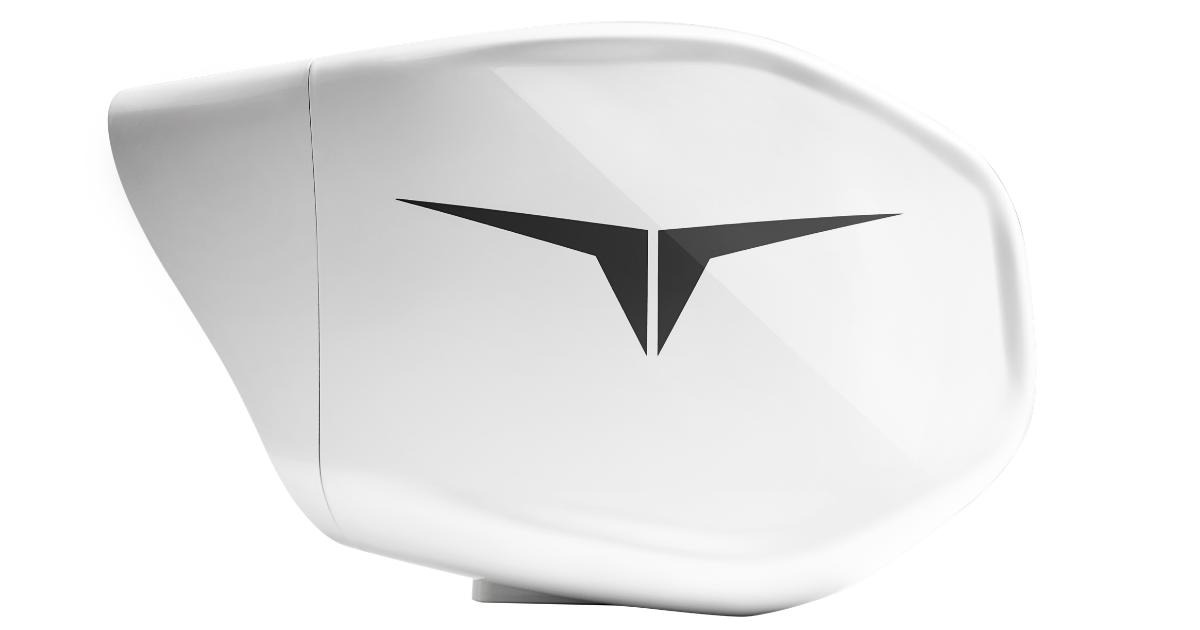
A Transcelestial CENTAURI device mounted on a pole on the roof of a building, to establish the laser link across the river to quickly restore services.
The laser link was deployed and operational within days, restoring services without waiting for bridge reconstruction, ground access, or civil works to begin.
Engineered to operate at the same standards as conventional infrastructure, the link has continued to perform reliably since deployment, maintaining service despite ongoing rain and challenging weather conditions. It has delivered 10Gbps full-duplex capacity and achieved a 99.9% service-level agreement, matching typical fiber performance, despite persistent rain and challenging weather conditions.
Rather than replacing existing infrastructure, the deployment demonstrates how laser-based wireless links can provide a fast, flexible alternative when physical routes are damaged, helping operators maintain continuity while long-term repairs are underway.
The system was activated in early October 2025 and remains in operation while permanent repairs continue. Disaster recovery use cases like these extend Taiwan Mobile’s collaboration with Transcelestial beyond current fixed deployments for mobile backhaul and last mile connectivity.
Rohit Jha, CEO and Co-Founder of Transcelestial said: “Taiwan Mobile’s decision to use lasers for disaster recovery sets an important precedent. It shows how countries exposed to extreme weather can restore communications quickly, even when traditional infrastructure is damaged or inaccessible. In Taiwan’s case, that meant bringing communications back within days after a typhoon, rather than waiting months. That difference matters at a national level.”
Taiwan’s east coast is known for difficult terrain and frequent exposure to extreme weather, making recovery of damaged infrastructure particularly complex. The incident highlights how failure at a single physical point can result in prolonged service disruption when communications networks depend on ground-based routes.
As climate-related events become more frequent, recovery speed is increasingly being viewed as a critical measure of network resilience, alongside traditional metrics such as capacity and performance.
——- END OF ANNOUNCEMENT——-
For press enquiries and requests, please contact: Rachael De Foe ([email protected])
For more, visit our website www.transcelestial.com OR follow us on X (@trans_celestial)
For sales enquiries, please contact: [email protected]
About Transcelestial:
Transcelestial has mass-produced a solution for superfast global Internet distribution that leverages its proprietary wireless laser communication technology to create a wireless distribution network between buildings, traditional cell towers, street-level poles and other physical infrastructure – with a much lower total operating cost for Mobile Network Operators, Internet Service Providers and enterprises.
Transcelestial aims to develop a constellation of LEO satellites allowing their laser network to not only connect inter-cities but upwards in space to connect continents globally.
Transcelestial has won numerous industry and global awards such as Most Frontier Company by Asiastar10x10, SPIFFY San Andreas Award for Most Disruptive Technology by Telecom Council, Forbes 30 Under 30 to their CTO Dr. Mohammad Danesh, Edge 35 Under 35 to their CEO Rohit Jha, The Most Ambitious Start-Up in Photonics Award by The Optical Society (OSA).