For enterprises in Jakarta, the wait for new fiber can delay office openings, branch rollouts and data center connections by months. Primacom, an Indonesian connectivity provider with 35 years in the market, is now using laser links to connect those sites in days.
Why fiber can’t always keep up
The delays start long before any cable goes into the ground. Each new route needs permits, access rights and roadworks, while Jakarta is also moving overhead cables into shared underground tunnels. With mobile operators under a five-year deadline to roll out 5G, competition for the same crews, permits and underground space is only rising.
Radio links are the usual alternative, but in dense business districts, the airwaves are crowded, licences add cost and speeds fall short of fiber.

What laser links changed in Jakarta
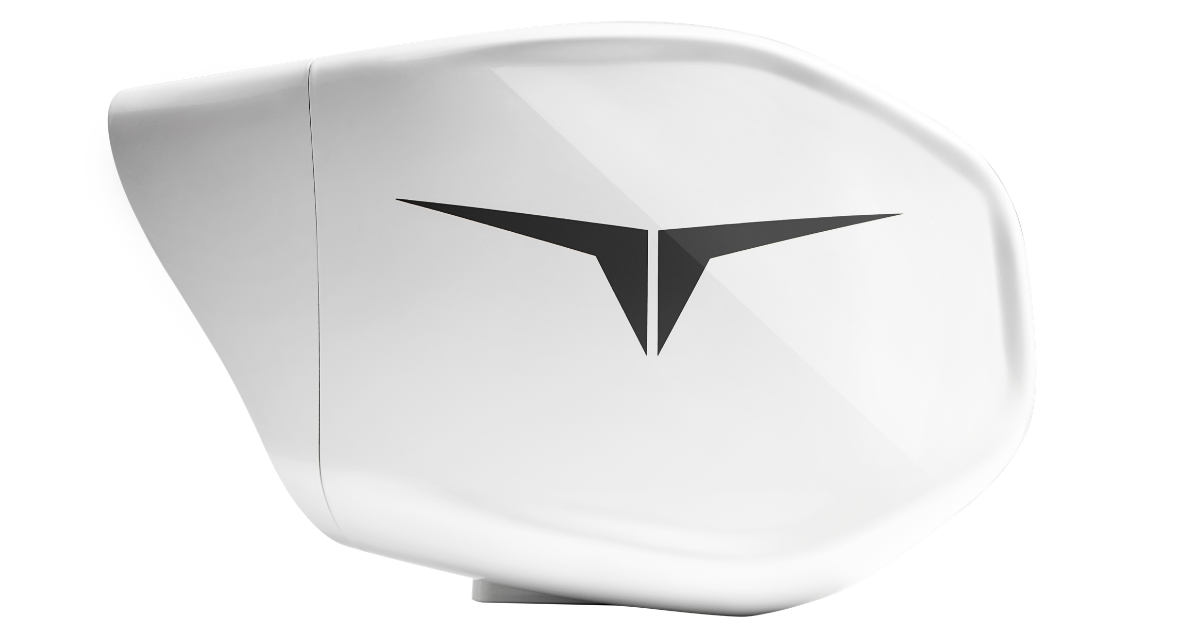
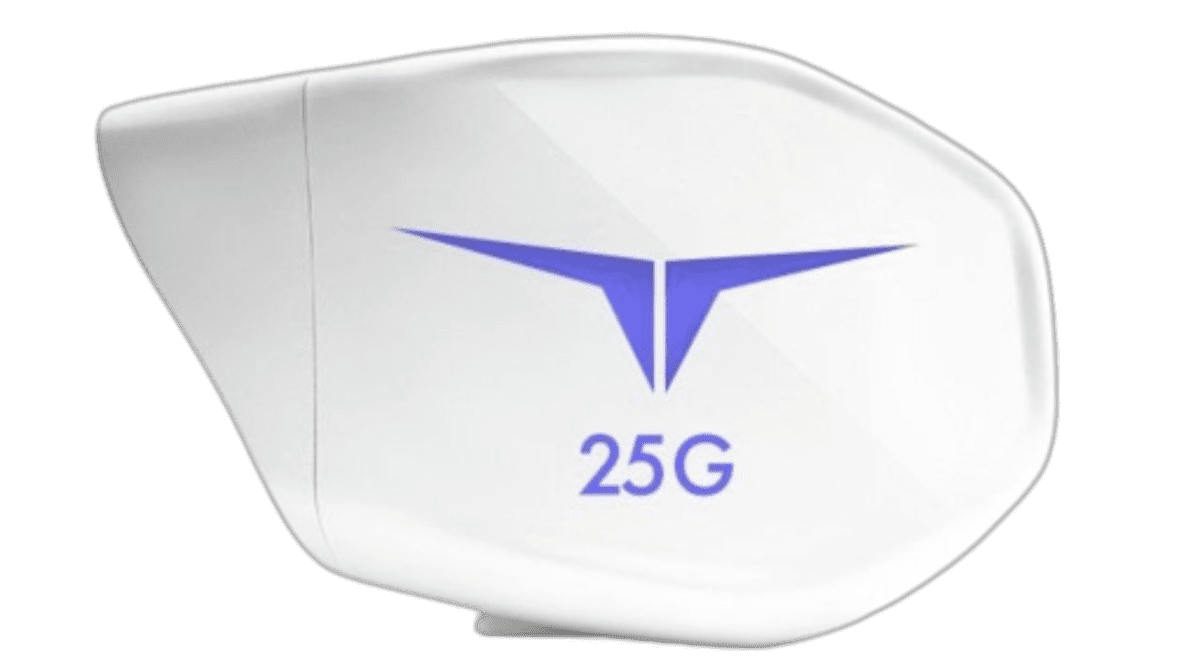
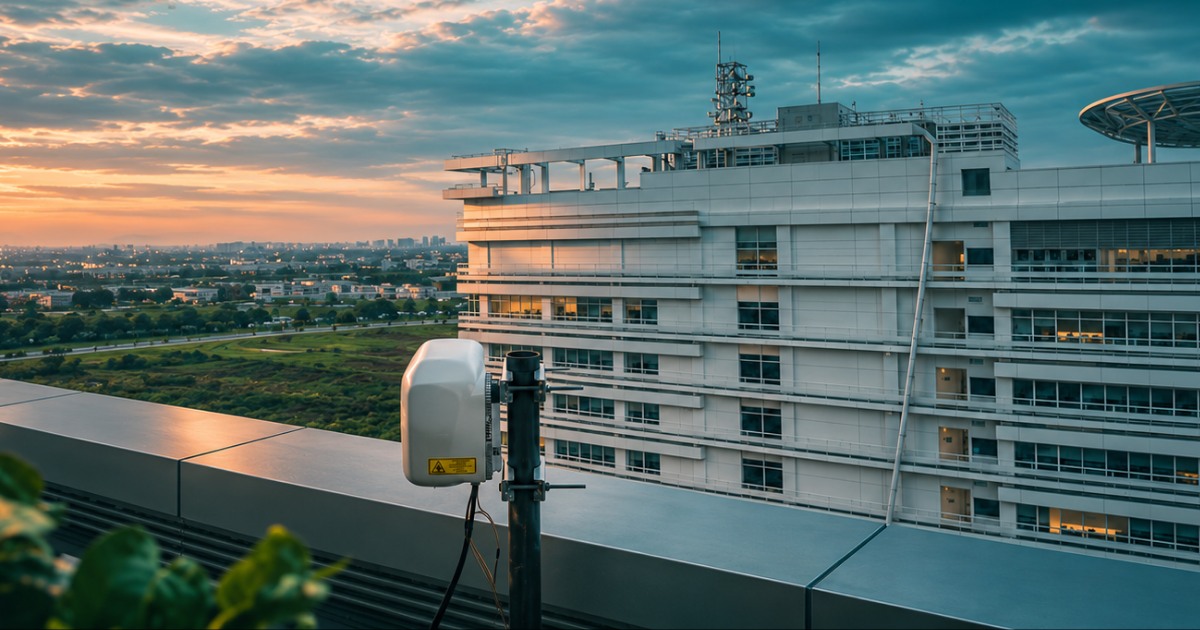
Laser links work like fiber without the cable. Two CENTAURI terminals, one on each building, send data to each other on a narrow beam of light through the open air. All they need is a clear line of sight between the two sites.
A link carries up to 10Gbps at sub-millisecond latency. There’s no trenching, no road permit and no spectrum licence, so a link can be installed and running in less than a day.
For Primacom, that turns the slowest part of connecting a customer into the fastest. If fiber reaches one building but cannot get to the next, a laser link carries the connection the rest of the way. It can also run alongside existing fiber as a backup path.
Laser links vs fiber
- Days, not months. A laser link can be installed and running in under a day. A new fiber route can take months of permits and roadworks.
- No civil works. There is no trenching, no road closures and no right-of-way negotiation, which also cuts out most of the build cost.
- A truly separate path. Backup fiber often runs along the same road as the main line, so one cut can take out both. A laser link travels through the air on a completely different route.
- It can relocate. If a customer relocates or a site is temporary, the link can be taken down and redeployed. A buried cable stays where it is.
Using lasers and fiber together
For most enterprises, the answer is not lasers instead of fiber, but lasers alongside it. There are three common setups:
- Last-hop extension. Fiber reaches one building, and a laser link carries the connection across the road to the next.
- Backup link. A laser link runs in parallel with fiber. If the fiber is cut, SD-WAN or a router switches traffic to the laser automatically.
- Bridge to fiber. A site goes live on a laser link while fiber is being built. Once the fiber lands, the laser link becomes the backup or moves to the next site.

Primacom’s enterprise edge
As Transcelestial’s Authorized Channel Partner, Primacom handles the full deployment for enterprise customers: connectivity assessments, site feasibility and line-of-sight checks, and turnkey installation. Laser links sit alongside its fiber, SD-WAN and data center services, so it can connect new customers quickly, link nearby offices into its data center, and give customers a backup path that does not share a road or duct with their fiber.
That last point matters for banks and other customers that cannot afford downtime. Backup fiber often runs along the same route as the main line, so a single cut can take out both. A laser link is physically separate by design.
That combination is the edge. A laser link is only useful if someone can survey the site, install it and support it. Primacom already has the enterprise relationships, the engineering teams and three decades of running networks for Indonesian businesses.
Already proven in Jakarta
Primacom has already deployed CENTAURI in Greater Jakarta. Its first link, near its data center in a privately managed residential and commercial area where fiber leasing is expensive and new fiber installation can be challenging, went live in under a day. It delivered the full 10Gbps, including during heavy rain.
For businesses in privately managed residential and commercial townships, deploying new fiber can be costly and time-consuming. CENTAURI offers Primacom a faster, more cost-effective alternative without the need for trenching, helping customers get connected when they need it.
Looking for high-capacity connectivity in Indonesia?
Primacom can assess your sites and deploy laser links wherever fiber can’t reach. Contact the Primacom team at [email protected]!
About Transcelestial
Transcelestial has mass-produced a solution for superfast global Internet distribution that leverages its proprietary wireless laser communication technology to create a wireless distribution network between buildings, traditional cell towers, street-level poles and other physical infrastructure – with a much lower total operating cost for Mobile Network Operators, Internet Service Providers and enterprises.
Transcelestial aims to develop a constellation of LEO satellites allowing their laser network to not only connect inter-cities but upwards in space to connect continents globally.
Transcelestial has won numerous industry and global awards such as Fast Company’s Most Innovative, Most Frontier Company by Asiastar10x10, SPIFFY San Andreas Award for Most Disruptive Technology by Telecom Council, Forbes 30 Under 30 to their CTO Dr. Mohammad Danesh, Edge 35 Under 35 to their CEO Rohit Jha, The Most Ambitious Start-Up in Photonics Award by The Optical Society (OSA).
About Primacom
Primacom was founded in 1991 as a satellite connectivity provider, connecting sites that cables could not reach. It has since grown into a full enterprise network provider, offering fiber, MPLS, SD-WAN, cloud services and a Rated-3 data center in Alam Sutera, Tangerang.
Its customers span banking, mining, oil and gas, plantations, manufacturing and distribution. The company is listed as serving more than 700 corporations across over 13,000 connection points.